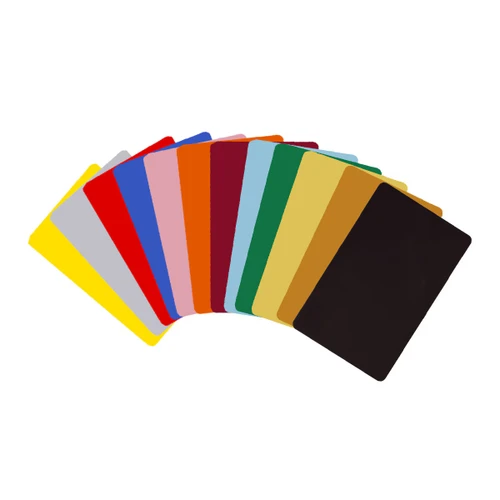
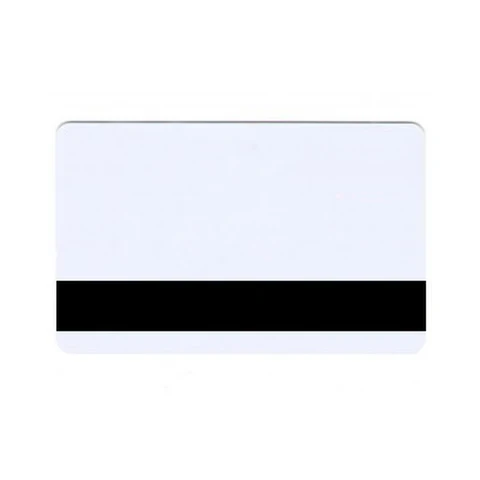
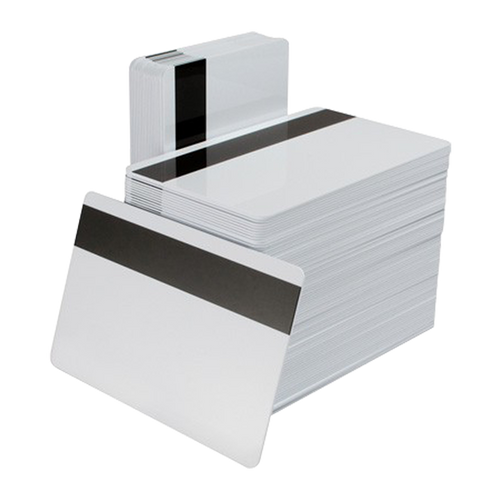
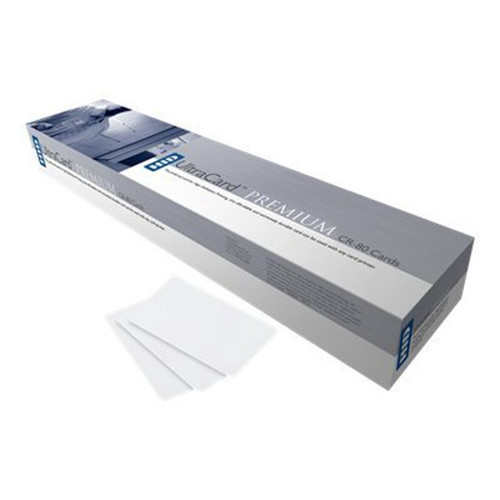
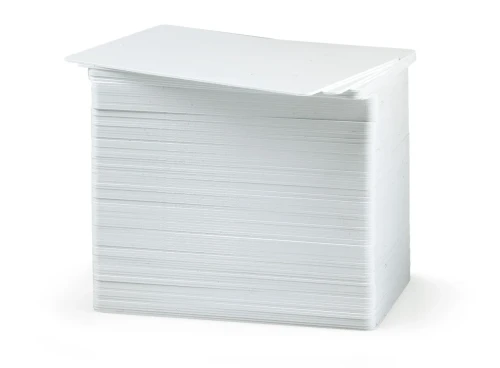
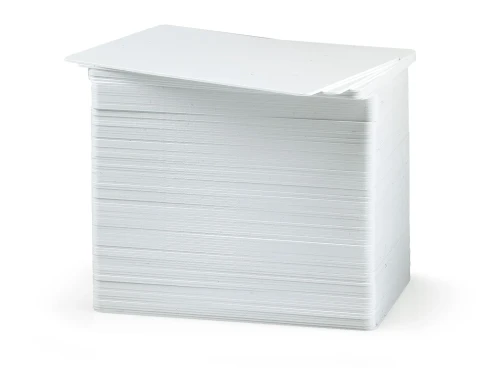
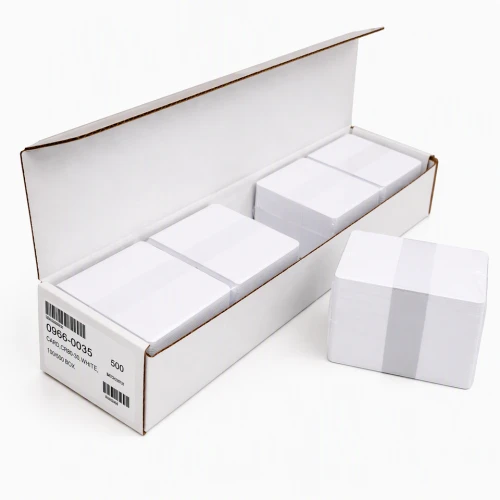
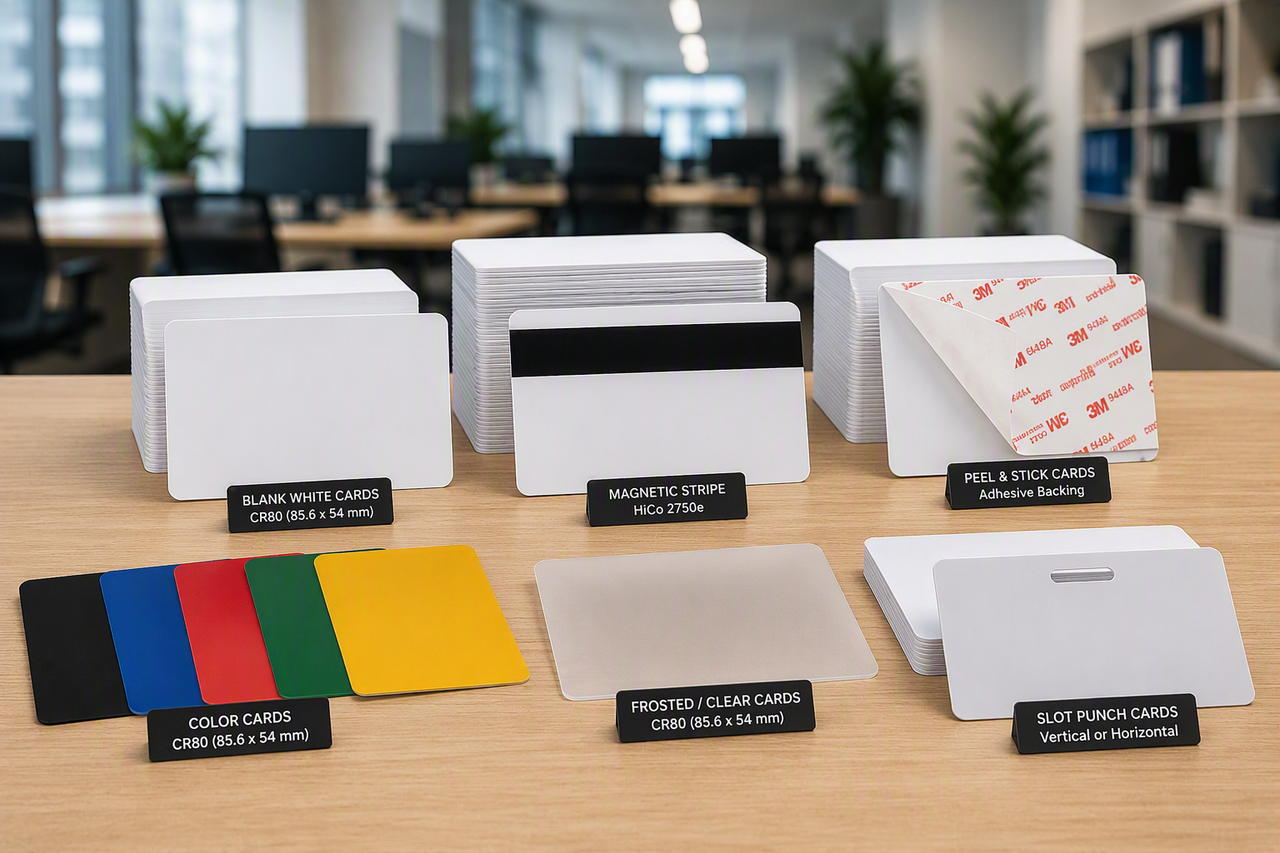
Blank CR80 cards are the standard credential stock for ID card printers. Plain PVC suits general badges; composite PVC-polyester withstands lamination heat and longer service life; technology cards carry proximity or smart chips for access control.
PVC vs composite cards
Standard PVC cards suit everyday badge printing at the lowest cost per card. Composite cards blend PVC with polyester, which resists the heat of lamination and retransfer printing and lasts longer in daily use. Retransfer printers and laminating printers generally require composite cards.
Technology and proximity cards
Technology cards carry an embedded chip or antenna — HID Prox, MIFARE and smart card formats — for access control and cashless systems. Retransfer printing is the usual choice over embedded electronics, since it prints cleanly over the uneven surface a chip can create.
Slot-punched and adhesive-back options
Slot-punched cards hang directly on a strap or clip without a separate punch step. Adhesive-back cards stick onto proximity clamshell cards, letting you print credentials for access cards that cannot run through a printer.
Card thickness explained
Standard thickness is 30 mil (about 0.76 mm) — the credit-card feel, and what most printers and laminators are specified for. Thinner 10 to 20 mil cards exist for short-term visitor badges but will not run reliably in every printer and cannot be laminated.
Which card for my printer?
Direct-to-card printers run standard PVC. Add a laminator or move to retransfer, and composite is the safe specification. Printing on technology cards? Match the chip format to your access system first, then the card construction to your printer.